

Most litigation teams commit to a review protocol within days of collection. That's a problem. At that point, they're making a multi-hundred-thousand-dollar staffing and scheduling decision based on metadata counts and custodian names alone. We've seen cases where firms assumed 60% responsiveness based on keyword hit rates, ran a full first-pass team for three weeks, and landed at 18% actual responsiveness. The math is painful.
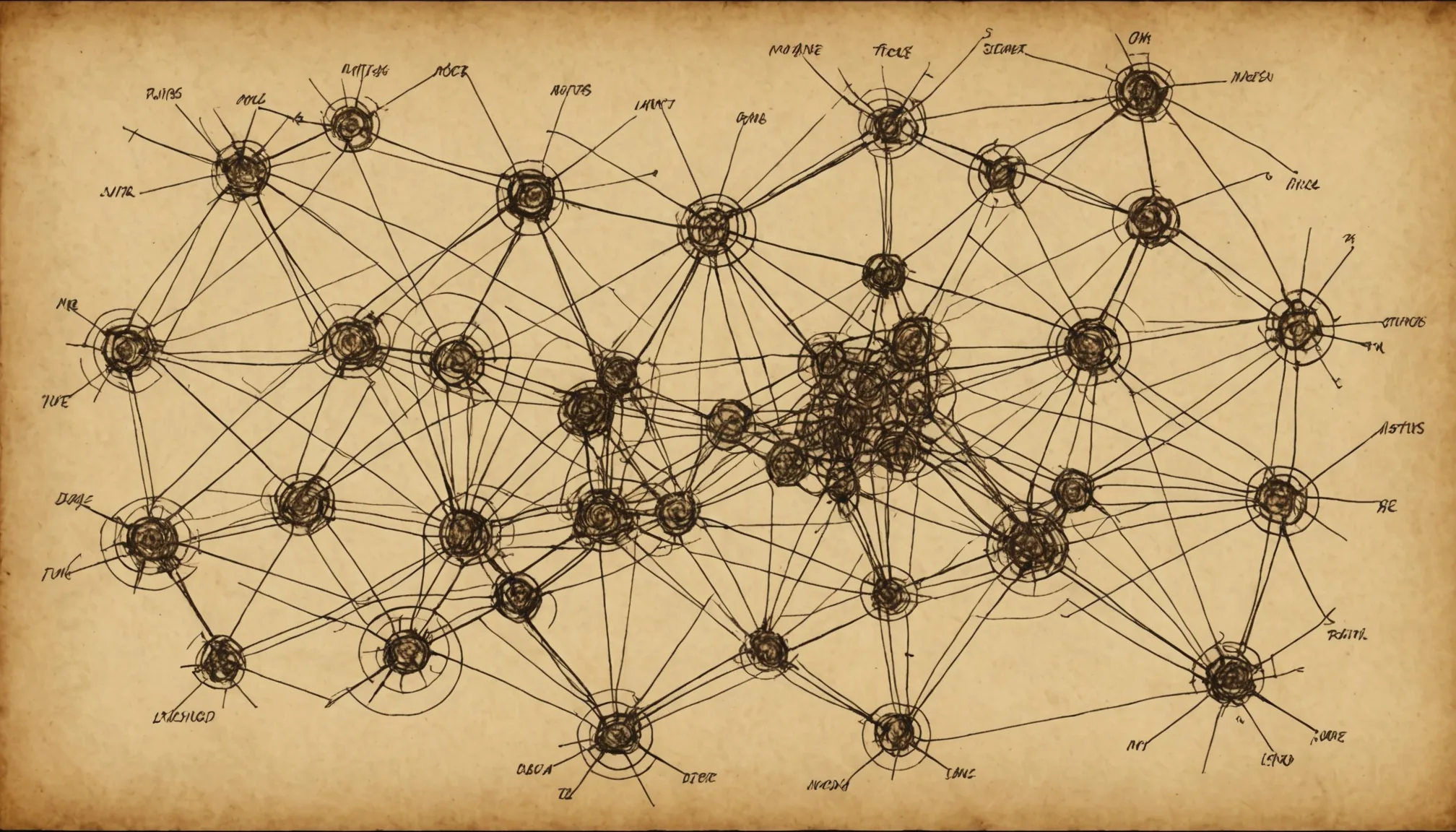
Concept clustering changes the decision point. Instead of guessing at collection density before review begins, you get a topographic map of what's actually in the data, by subject proximity, not by metadata tag. That map exists within 2 hours of collection ingestion.
What Concept Clustering Actually Does
Here's the thing: most attorneys already know what the disputed topics are. What they don't know before review is where those topics live in the collection, how concentrated they are across custodians, and whether there are surprise topic clusters that shouldn't be there at all.
Concept clustering groups documents by content similarity, not by sender, date, or keyword match. The algorithm identifies proximity in high-dimensional semantic space and produces clusters of documents that discuss the same conceptual territory. No metadata dependency. A document from 2019 and a document from 2023 discussing the same pricing methodology end up adjacent, even if they share zero keywords and no custodians.
The output is a cluster map with labeled groupings. Each cluster has an estimated document count, a density score, and the top custodians whose documents populate it. That's the picture you didn't have before.
The Custodian Concentration Signal
Custodian concentration patterns are, in our experience, the single most underused diagnostic in pre-review planning. Attorneys routinely receive custodian lists of 15, 20, 40 people and treat them as roughly equivalent review contributors. They're not.
What cluster maps reveal consistently: 3 to 5 custodians typically account for 60 to 75% of the documents in the most responsive topic clusters. The rest of the custodian list is producing peripherally relevant or non-responsive material at a rate that doesn't justify equal-weight review.
Fact: in collections we've analyzed involving financial communications, the top-contributing custodian averaged 4.2x the responsive document density of the median custodian. That multiplier matters when you're deciding whether to run full first-pass across all custodians or whether targeted prioritization is defensible.
Once you know concentration exists, you have a choice. You can still run full review. Or you can run targeted first-pass on the high-density clusters, log your prioritization rationale, and hold the peripheral custodians for secondary sampling. Courts have increasingly accepted this approach when the decision is documented and the methodology is disclosed.
Identifying Responsive Hotspots Before Review Commits
Responsive hotspots are clusters that align closely with the claims and defenses in the case. They're the parts of the collection where every document has a meaningful probability of requiring attorney attention. You want to find them before you build your review workflow, not after two weeks of reviewers working through everything sequentially.
The cluster map surfaces them by label proximity. Topics nearest the core disputed issues cluster together. A tax dispute case will show you a pricing-methodology cluster, a board-communications cluster, a third-party-advisors cluster, and, if you're lucky, a cluster that has no business being there that your client forgot to mention during intake. That last one happens more than anyone advertises.
Once hotspots are identified, batch setup for first-pass changes. You push the responsive-hotspot clusters to senior reviewers first. You allocate junior reviewer time to the clearly non-responsive clusters for quick culling. You don't build a flat queue. This alone typically reduces wasted review hours by 20 to 35% on medium to large matters, in our tracking of collections above 500,000 documents.
Handling Incremental Batches
Collections don't always arrive at once. Rolling preservation, supplemental custodian additions, court-ordered expansions, mobile data drops late in discovery, these happen. A static cluster map built at day one goes stale.
The practical answer is refresh-on-ingestion. When new document batches come in, the cluster map recalculates. Documents in the new batch get positioned relative to the existing cluster topology. New clusters that weren't present in the original collection surface as distinct groupings rather than forcing documents into the nearest existing category.
That refresh matters operationally. New custodian documents that map to an already-reviewed responsive cluster can be fast-tracked for targeted review. New documents that form an unexpected new cluster flag for attorney review of scope before reviewers touch them. You catch scope creep at the data layer, not after the billing cycle closes.
Practical note: the fastest path to defensible scope management isn't more detailed keyword work. It's a visual cluster map that shows you what's in the collection before your first reviewer logs in.
The Targeted vs. Full First-Pass Decision
This is the decision that concept clustering is actually built to inform. Not keyword design. Not TAR seed set selection. Those come later. The upstream question is whether this collection warrants full first-pass at all, or whether a targeted approach is faster, cheaper, and equally defensible.
Full first-pass across a 2 million document collection at average review speeds runs 6 to 10 weeks with a mid-size review team. That timeline has real consequences for case strategy, negotiating position, and client cost tolerance. If 65% of the collection clusters into clearly non-responsive topic groupings, running full first-pass on those documents is waste, not diligence.
Targeted first-pass, by contrast, routes high-concentration responsive clusters to substantive review immediately, culls clearly non-responsive clusters with lighter quality-control sampling, and produces a privilege-screened production batch weeks earlier. We've found the defensibility concern is manageable when the cluster methodology is transparent and the sampling protocol on culled clusters is documented at the matter level.
The decision tree looks like this:
| Scenario | Recommended approach |
|---|---|
| Responsive hotspots > 50% of collection | Full first-pass, prioritize hotspot clusters |
| Responsive hotspots 25-50% of collection | Targeted first-pass with sampling on peripheral clusters |
| Responsive hotspots < 25% of collection | Targeted first-pass, heavier sampling, early production cycle |
| Unexpected topic clusters present | Attorney scope review before any first-pass begins |
The 2-hour turnaround on cluster map generation means this decision happens at day one of processing, not after a week of index builds. That timing is what makes it operationally useful rather than academically interesting.
Putting It to Work
Concept clustering doesn't replace attorney judgment about responsiveness. It informs attorney judgment before any reviewer budget is committed. The map doesn't code documents. It shows you the terrain.
In our experience, the teams that use cluster analysis most effectively treat it as a mandatory pre-review step on every matter above 100,000 documents. Not an optional analytics add-on. A required input to the protocol decision that goes into the matter strategy memo. Once you've used it to catch an unexpected sensitive cluster before review began, you stop thinking of it as optional.
The collections are only getting larger. The expectation to produce faster isn't going away. Getting a complete topographic picture of the data two hours after ingestion isn't a luxury. It's the starting point.