Document review that learns what matters to your case.
Discovarc applies predictive coding and privilege classification to first-pass review — built for litigation support teams and corporate legal departments handling large-volume productions.
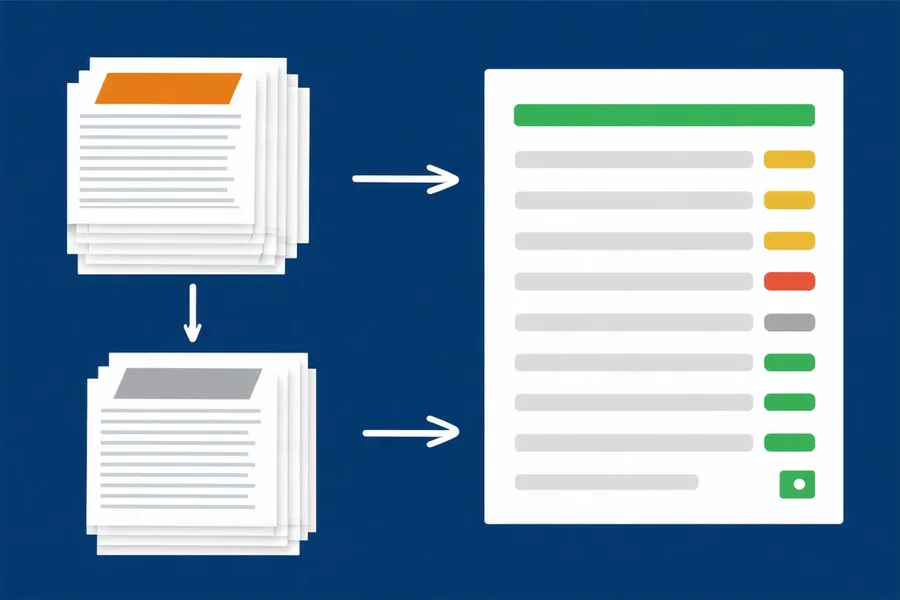
"Large-volume productions still rely on reviewer judgment applied inconsistently across thousands of documents — and privilege calls made without a systematic log."
First-pass review teams apply inconsistent tags across custodians and document types, creating quality-control rework at production.
Privilege review without automated detection risks inadvertent waiver on high-volume productions with compressed timelines.
Review protocol documentation for court admissibility requires engineering time most litigation support shops don't have.
From ingest to production, in four phases.
Documents uploaded from PST, EML, PDF, DOCX. De-duplication and threading applied. Custodian assignment tracked throughout.
Seed set reviewed by counsel. Predictive model trained iteratively. Responsive, privileged, and non-responsive tags applied at scale.
Stratified sampling across prediction tiers. Exception review workflow. Confidence scoring with elusion testing for stopping criteria.
Load file export in Relativity, IPRO, or Concordance formats. Privilege log generation. Bates numbering and production set packaging.
Consistent tagging, at document scale.
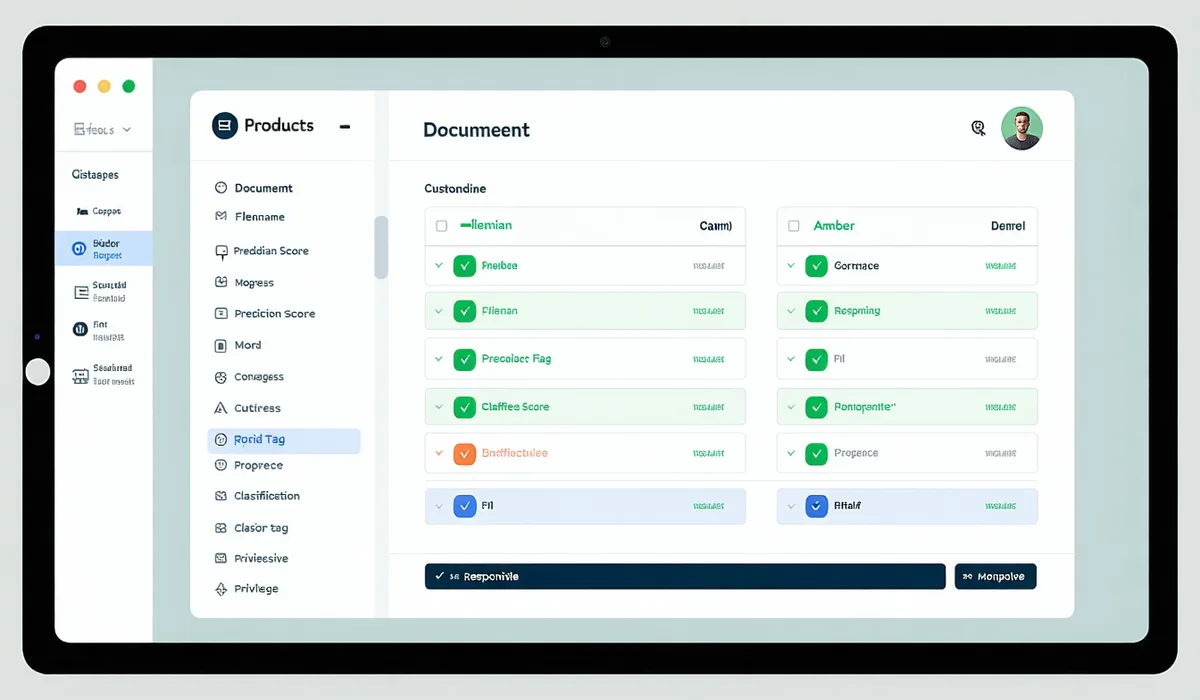
Discovarc applies model confidence scores to each document, flagging privilege indicators and assigning classification tags — giving QC teams a structured exception workflow rather than a full re-review.
Built for the teams handling discovery.
Multi-custodian productions under compressed timelines. Consistent tagging at volume with privilege protection.
For Law FirmsGovernment investigation responses and internal litigation without full outside-counsel review engagement.
For Corporate LegalResponding to SEC, DOJ, or FTC subpoenas with structured review workflow, privilege log, and audit trail.
See WorkflowWhat practitioners are saying.
Inconsistent tagging across a four-custodian production was costing us an entire QC pass before production. Having a model that surfaces its own exception set changed how we structure the review workflow.
Litigation Support Director, large commercial litigation practice
The privilege log engineering burden on a compressed SEC subpoena response is real. Automating that field population — while keeping attorney review in the loop — was exactly what we needed.
Associate General Counsel, Fortune 1000 manufacturing company
Insurance defense volume review requires consistency across matters, not just speed. The QC sampling workflow and confidence tiers gave us something we could actually defend to the partner on the matter.
E-Discovery Manager, regional insurance defense firm
Review faster, produce with confidence.
Chicago, IL — working with litigation support teams and corporate legal departments across the US.
Request a Walkthrough